Staying at Mandara Hut on Kilimanjaro – A Guide for Trekkers
Mandara Hut on Kilimanjaro is a nice campsite on the southeastern side of the mountain. It’s the first stop for trekkers on the Marangu route. The campsite has A-frame huts where you can stay in a shared dormitory-style room.
Mandara Hut (2,720 m) on Kilimanjaro is the first campsite you reach when trekking the Marangu route. It’s located in a clear area inside the forest at the lower part of Mount Kilimanjaro. From here, you get a great view of the summit, Uhuru Peak.
Mandara Hut is used by trekkers on both their way up and down the mountain. It’s where they stay on their first and last nights. Trekkers who come up via the Shira route also use this hut as they descend along the Marangu route.
Facilities at Mandara Hut
At Mandara Hut, like all the campsites on the Marangu route, there are A-frame wooden sleeping cabins. (So, the name “Mandara Hut” might not be quite right—it could be called Mandara Huts instead.)
Each cabin has simple bunk beds and mattresses and can sleep six or eight people. There is also a large cabin for the mountain crew to sleep in.
The campsite has a dining cabin where meals are served, and there’s an ablution block with pit latrines (also called long drops).
Mandara Hut is the first campsite along the Marangu route
The trail to Mandara Hut
The trail to Mandara Hut (2,720 m) starts at Marangu Gate (1,860 m), one of the entrances to Kilimanjaro National Park. It usually takes about three hours to walk from the gate to the campsite.
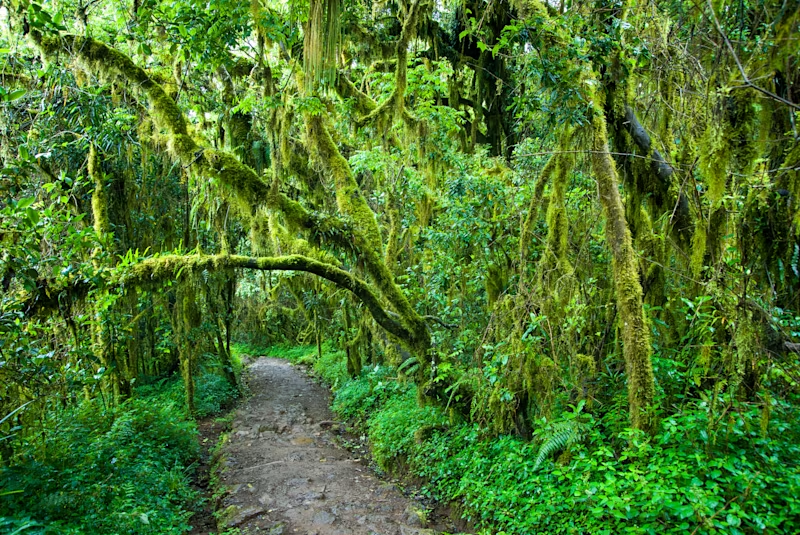
The path is clear and fairly flat, taking you through a beautiful and dense rainforest. It can be damp or wet, making the trail a bit slippery.
Most people on this part of the trail are starting their first day of climbing Kilimanjaro. But there are also day hikers, who are usually hiking to Mandara Hut and Maundi Crater as part of a roundtrip day hike.
Speaking of Maundi Crater …
A section of the Marangu trail leading to Mandara Hut
Vegetation of Mandara Hut
Mandara Hut is in the lower forest of Kilimanjaro, surrounded by beautiful plants and trees. The forest is a closed-canopy mixed rainforest. You’ll see many camphorwoods, yellowwoods, and tree ferns, along with other types of plants.
One special plant to look out for is the Kilimanjaro impatiens. This small, colorful flower can only be found in the Kilimanjaro rainforest! Be sure to look for this beautiful flower during your time in the forest.
Wildlife of Mandara Hut
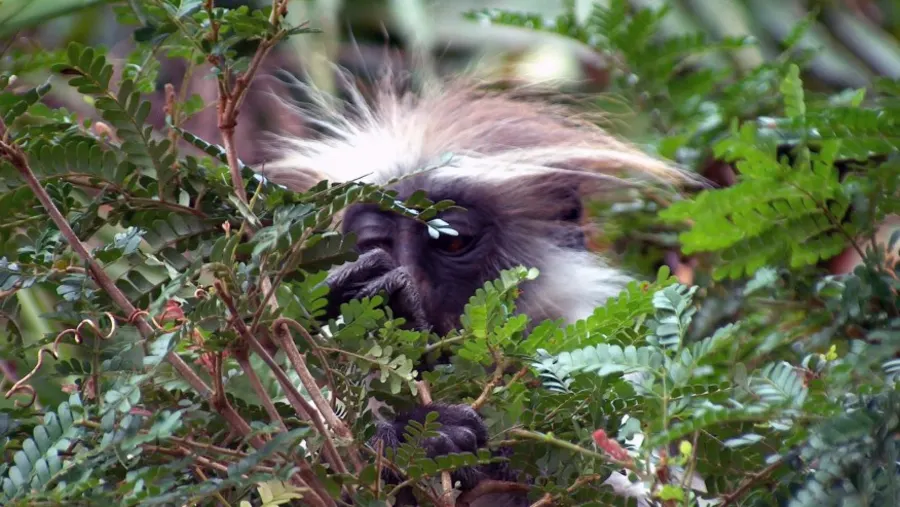
A black-and-white colobus monkey
On Kilimanjaro, there are 87 species of forest mammals, according to the United Nations Environment Programme. These include various types of primates, carnivores, antelopes, and bats.
While staying at Mandara Hut, you might see animals like black-and-white colobus monkeys, blue monkeys, bush babies, and duikers.
A special animal to look out for is the Kilimanjaro swallowtail butterfly. This brown-and-white butterfly is very rare and can only be found on Kilimanjaro, so don’t miss it if you spot one!
To see wildlife, we recommend walking quietly into the forest near the campsite. You might also spot different bird species, such as the wattled ibis (with shiny green feathers), Kenrick’s starling (a black bird that’s hard to spot), and Abbot’s starling (which has a white belly, making it easier to find).
If you’re curious about more animals you might encounter on the mountain, check out “What animals will I see on Kilimanjaro?”
Lastly, if you want to know more about the Marangu route, including why we don’t recommend it, read “The Marangu route on Kilimanjaro – a day-by-day itinerary.
Ready to Climb Kilimanjaro?
Preparation is the foundation of a successful Kilimanjaro trek. By training properly, choosing the right gear, and planning your route wisely, you’ll be one step closer to conquering Africa’s tallest peak.
Start preparing today—and make your Kilimanjaro dream a reality!